COMPACT R6X12 Double Acting Pneumatic Cylinder
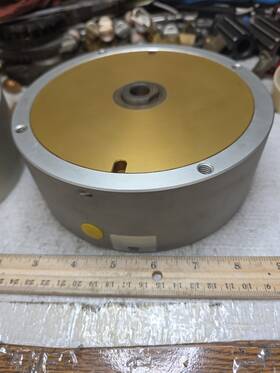
( Brand: Compact ), ( Manufacturer Part Number: R6X12 ), ( Part Type: Pneumatic Cylinder )
Review COMPACT Double Acting Pneumatic Cylinder Used In Excellent Condition
The **R6X12 Double-Acting Pneumatic Cylinder** is a high-performance, industrial-grade actuator designed for precision motion control in demanding applications across manufacturing, automation, and material handling systems. Engineered with robust construction, this cylinder features a **6-inch bore diameter (R6)** and a **12-inch stroke length**, delivering a substantial force output of up to **1,200 pounds (5,400 N)** per side, making it ideal for heavy-duty tasks such as clamping, pressing, positioning, and assembly operations. Its **double-acting design** ensures bidirectional force, allowing for controlled extension and retraction powered by compressed air, eliminating the need for external springs or mechanical returns. The cylinder s **aluminum alloy housing** provides a lightweight yet rigid structure, reducing overall system weight while maintaining exceptional durability against wear and tear, vibration, and thermal fluctuations.
The **sealing system** incorporates high-quality polyurethane or nitrile rubber seals, ensuring minimal air leakage and extended operational life even under cyclic loading. The **piston rod**, made from corrosion-resistant stainless steel or chrome-plated steel, is precision-ground for smooth operation and is protected by a robust rod wiper to prevent contamination from entering the cylinder. For enhanced safety and reliability, the **end caps** are securely fastened with high-strength bolts, while the **mounting flanges** (available in various configurations, including clevis, trunnion, or foot mount) allow for flexible integration into existing machinery. The cylinder s **standard ISO 6431 or ANSI B93.10M dimensions** ensure compatibility with most pneumatic control systems, and its **quick-connect fittings** (M16 or NPT) simplify installation and maintenance.
This pneumatic cylinder is equipped with **adjustable cushioning** on both the extension and retraction sides to dampen impact forces, reducing noise and prolonging component lifespan. The **piston rod s smooth, low-friction coating** minimizes wear on guide bushings or bearings, while the **internal lubrication system** (optional) further enhances efficiency by reducing friction between moving parts. Suitable for operating pressures up to **100 PSI (6.9 bar)**, the R6X12 excels in applications requiring consistent, repeatable motion, such as in CNC machining centers, robotic arms, packaging equipment, and automated assembly lines. Its **compact yet sturdy design** also makes it well-suited for space-constrained environments where precision and reliability are critical. With proper maintenance including regular seal inspections, lubrication, and air filter upkeep the R6X12 Double-Acting Pneumatic Cylinder delivers decades of dependable service, making it a cost-effective solution for industries prioritizing efficiency and performance.
**Pros and Cons of Buying an R6x12 Double-Acting Pneumatic Cylinder**
A double-acting pneumatic cylinder like the R6x12 model offers both extension and retraction under pneumatic pressure, making it versatile for various industrial applications. Below is a detailed breakdown of its advantages and disadvantages.
---
### **Pros**
1. **Bidirectional Force**
The double-acting design allows the cylinder to exert force in both extension and retraction directions, enabling precise control over movement in both directions. This is ideal for applications requiring pushing and pulling actions, such as clamping, pressing, or positioning.
2. **High Speed and Efficiency**
Pneumatic systems generally operate at high speeds due to the compressibility of air, which allows for rapid extension and retraction. This makes them suitable for high-cycle applications where quick movements are necessary.
3. **Durability and Longevity**
Pneumatic cylinders are robust and can withstand harsh environments, including exposure to dust, moisture, and temperature fluctuations. They are less prone to wear from electrical issues (unlike hydraulic systems) and have fewer moving parts compared to electric actuators, reducing maintenance needs.
4. **Energy Efficiency**
Pneumatic systems are energy-efficient for short-duration, high-force applications. Air compressors can be powered by electric motors, and the energy is stored in compressed air, which can be released quickly as needed. Additionally, excess air can often be vented without significant energy loss.
5. **Low Maintenance**
Since pneumatic cylinders rely on air rather than fluids, they do not require lubrication or fluid changes. Regular maintenance typically involves checking for leaks, cleaning air filters, and inspecting seals, which are minimal compared to hydraulic or electric systems.
6. **Safety**
Pneumatic systems are inherently safe in many applications because they do not use high-pressure fluids or electricity. In case of a leak, compressed air is non-toxic and non-flammable, reducing the risk of environmental or safety hazards.
7. **Scalability and Customization**
Double-acting cylinders like the R6x12 can be customized with different rod lengths, stroke lengths, and mounting options to fit specific application requirements. They can also be integrated with various pneumatic accessories, such as cushions, end-of-stroke sensors, or quick-connect fittings.
8. **Cost-Effective for High-Volume Applications**
While the initial cost of a pneumatic system may be higher than some electric alternatives, the operational cost per cycle is often lower, especially in high-volume production environments. The simplicity of the system also reduces downtime due to maintenance or failures.
9. **Clean Operation**
Pneumatic systems do not produce oil or fluid leaks, making them suitable for applications where cleanliness is critical, such as food processing, pharmaceuticals, or electronics manufacturing.
10. **Compatibility with Existing Systems**
Many industrial facilities already have air compressors and pneumatic infrastructure in place. Integrating a double-acting cylinder like the R6x12 into an existing system can be straightforward and cost-effective.
---
### **Cons**
1. **Lower Precision Compared to Hydraulics or Electric Actuators**
Pneumatic systems are less precise than hydraulic or electric systems due to factors like air compressibility, temperature variations, and pressure fluctuations. This can lead to inconsistencies in positioning or speed, especially in applications requiring high accuracy.
2. **Energy Loss Due to Compressibility**
Air is compressible, which means that energy can be lost as the cylinder extends, particularly at high speeds. This can reduce the efficiency of the system, especially in applications requiring precise control over force or speed.
3. **Noise and Vibration**
Pneumatic systems can generate significant noise and vibration, particularly at high pressures or speeds. This can be problematic in environments where noise reduction is critical, such as in offices, laboratories, or residential areas near industrial facilities.
4. **Dependence on Air Supply**
The performance of a pneumatic cylinder is directly dependent on the quality and consistency of the air supply. Poorly maintained air compressors, dirty air filters, or inconsistent pressure can lead to erratic performance or damage to the cylinder.
5. **Limited Force Control**
While double-acting cylinders can exert force in both directions, controlling the exact force output can be challenging. Unlike hydraulic systems, which can use pressure regulators for fine-tuned control, pneumatic systems often rely on pressure settings that may not offer the same level of precision.
6. **Sensitivity to Environmental Conditions**
Extreme temperatures, humidity, or contamination in the air supply can affect the performance of pneumatic cylinders. For example, moisture in the air can cause corrosion, while dust or debris can clog filters or damage seals.
7. **Initial Cost of Air Compression Infrastructure**
While the cylinder itself may be cost-effective, setting up a pneumatic system often requires investing in an air compressor, dryers, filters, and piping. These additional components can increase the overall upfront cost, especially for small-scale applications.
8. **Limited Stroke Length for Small Cylinders**
The R6x12 model, being a smaller cylinder, may have a limited stroke length compared to larger models. This could restrict its use in applications requiring long travel distances or large displacements.
9. **Potential for Leaks**
Pneumatic systems are prone to air leaks, which can occur at fittings, hoses, or seals. While leaks are generally not hazardous, they can lead to energy waste, reduced performance, and increased maintenance requirements.
10. **Less Suitable for Static or Low-Speed Applications**
Pneumatic cylinders are not ideal for applications requiring slow, steady movements or static holding forces. In such cases, electric actuators or hydraulic systems may provide better control and stability.
---
### **Conclusion**
The R6x12 double-acting pneumatic cylinder is a versatile and durable choice for applications requiring bidirectional force, high speed, and low maintenance. Its advantages such as energy efficiency, safety, and compatibility with existing pneumatic systems make it well-suited for industrial environments where rapid, forceful movements are needed. However, its limitations including lower precision, noise, and sensitivity to air quality may make it less ideal for applications demanding high accuracy, quiet operation, or fine force control.
For applications where speed, durability, and simplicity are prioritized over precision, the R6x12 double-acting pneumatic cylinder is a strong recommendation. It is particularly well-suited for:
- Clamping or pressing operations in manufacturing.
- Packaging or material handling tasks.
- Applications in food processing or cleanroom environments where cleanliness is critical.
- High-cycle automation where maintenance time must be minimized.
For applications requiring precise positioning, slow movements, or minimal noise, alternative actuators such as hydraulic cylinders or servo-driven electric actuators may be more appropriate. Always consider the specific requirements of your application, including force, speed, precision, and environmental conditions, when making a decision.
Details:
Perfect for businesses looking a high-quality and dependable solution their hydraulic pneumatic needs. Made by the trusted brand COMPACT, this pneumatic cylinder ensures durability and performance even in challenging environments. The COMPACT R6X12 double acting pneumatic cylinder is a reliable and efficient component used in various industrial applications. With its Compact design and double acting functionality, this cylinder offers precise controlled movement for a wide range of operations.
part #: r6x12 price
- $49.00
specifications hydraulimoto:
- brand: Compact
- mpn: R6x12
- part type: Pneumatic Cylinder
shipping hydraulimoto:
- transit: 2-6 Days
- carrier: USPS
- type: Fixed
- class: Standard
- cost: $15.00
- service: USPS Ground Advantage
general hydraulimoto:
- condition: Used
- Business Industrial > Hydraulics, Pneumatics, Pumps Plumbing > Hydraulic Pneumatic Motors
payments hydraulimoto:
- wallet: Paypal
- other
- credit card: Diners-club
offer hydraulimoto:
- started: June 10, 2026
- best offers: True
- options: Ship-to-home
- sold: 0
- availability: In Stock
- quantity: 1
seller hydraulimoto:
- # reviews: 5763
- rating: 100.0%
- city: Monticello, Minnesota
returns hydraulimoto:
- time: 30 Days
- policy: Returns Accepted
- method: Money back
- paid by: Buyer
Compact R6X12 Is Similar To:
- Ca50-32 Bosch Excellent Hagglunds Compact (34.8% similar) A solid drive shaft insert for the hollow spline is included. When repair is uneconomical, we assist you in sourcing and selecting viable replacement options. 26 in 464MM diameter x 12. This unit had been lightly used in a high-efficiency energy research test apparatus before being decommissioned ...(October 11th, 2017)
- Smc Mgpl40tf-50z Compact Guide Cylinder 40mm Mgp Ball Bearing (41.5% similar) For sale is a MC MGPL40TF-50Z Compact guide cylinder 40MM mpg ball bearing in new condition. Condition notes. Packaging may have some damage, but product is unaffected. Unused surplus...(July 1st, 2025)
- Compact Rfh5x12-tr Double Acting Pneumatic Cylinder 5 Inch Bore 1 2 Stroke New (71.1% similar) The double acting design allows for efficient operation in both directions, making it versatile a range of applications. New no box the Compact RFH5X12-TR double acting pneumatic cylinder is a Compact and powerful hydraulic component designed for industrial applications. Built by the trusted brand ...(May 25th, 2026)
- Compact Rfh5x14 Double Acting Pneumatic Cylinder Used In Excellent Condition (96% similar) The Compact design of this cylinder makes it easy to install and operate, providing a convenient solution for hydraulic pneumatic systems. With its trusted brand name and proven reliability, the Compact RFH5X14 cylinder is a top choice for those in need of high-quality pneumatic component. This ...(June 10th, 2026)
